Gambiered silk — known in Chinese as Xiangyunsha (香云纱), or Liangchou (莨绸) — is a rare silk created through a fully natural process. Its color and character emerge from the interaction of plant tannins, sunlight, air, and mineral-rich river mud — not synthetic dyes or artificial finishes.
The fabric is dyed with natural extracts, sun-dried, oxidized, and finished with river mud through multiple repetitions. There are no shortcuts. Each stage leaves a visible trace on the surface, giving the silk its distinctive matte texture, depth of tone, and quiet strength.
Because the process relies on natural materials and conditions, subtle variations in color and texture occur naturally. No two lengths are ever identical. These variations are not imperfections, but signs of authenticity — a record of how the fabric was made.
In a world of accelerated production and uniform finishes, Gambiered silk represents a different value system: longevity over trend, process over speed, and substance over surface shine. Its restrained, structural quality aligns naturally with NOMERAE’s design language, where material is not decoration, but the foundation.
Xiangyunsha has been made in the Pearl River Delta of Guangdong for centuries. Its dyeing and finishing technique (香云纱染整技艺) is recognised as part of China's National Intangible Cultural Heritage, inscribed on the national list in 2008.
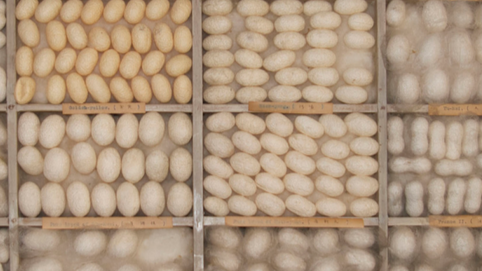
Silkworm
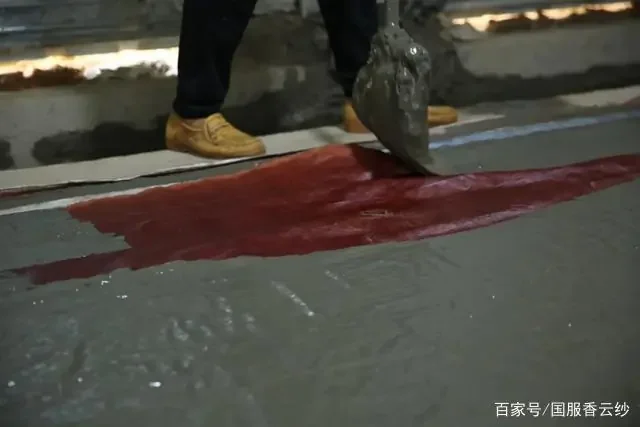
Rivers Mud covering
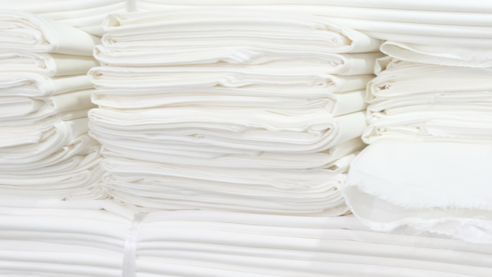
Raw silk fabric
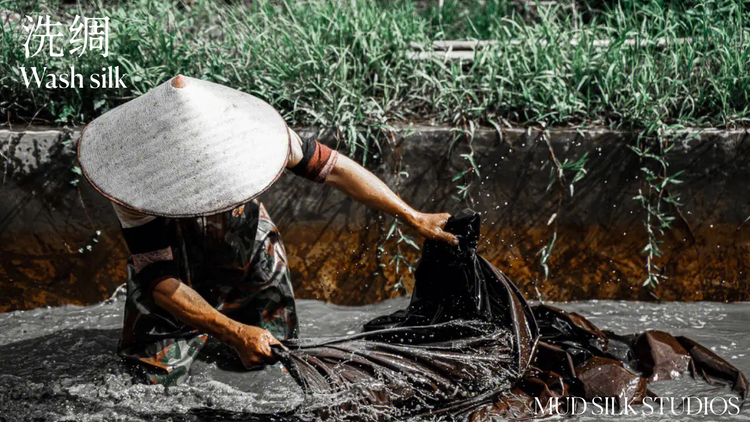
Washing in river
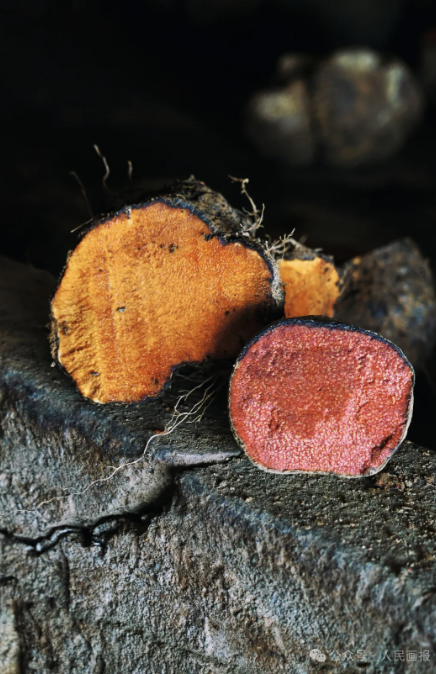
Shuliang Root
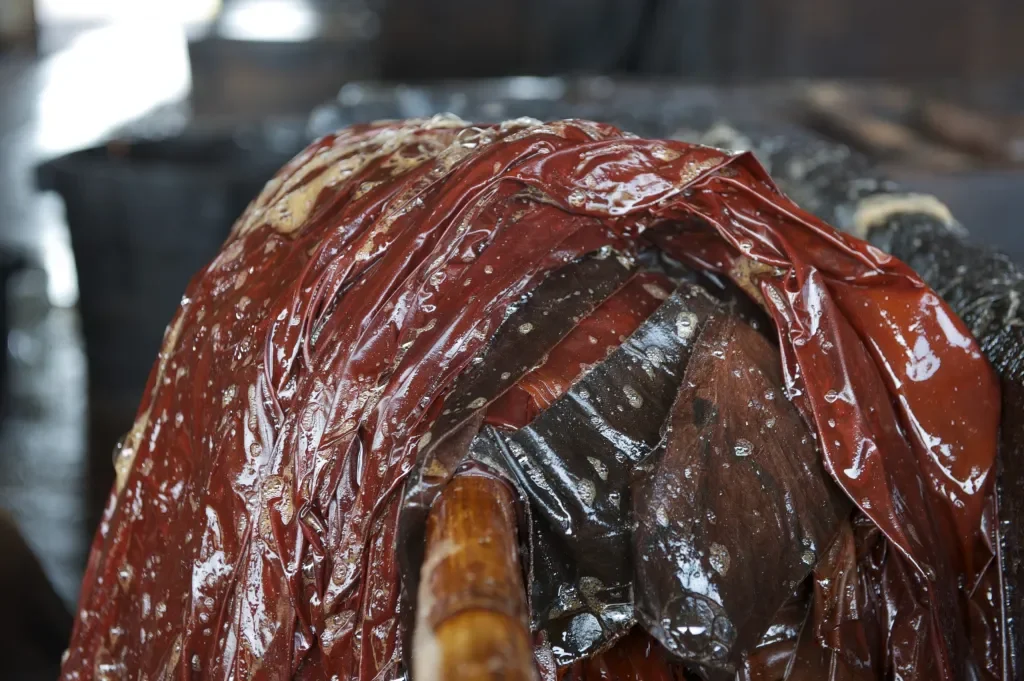
Water draining
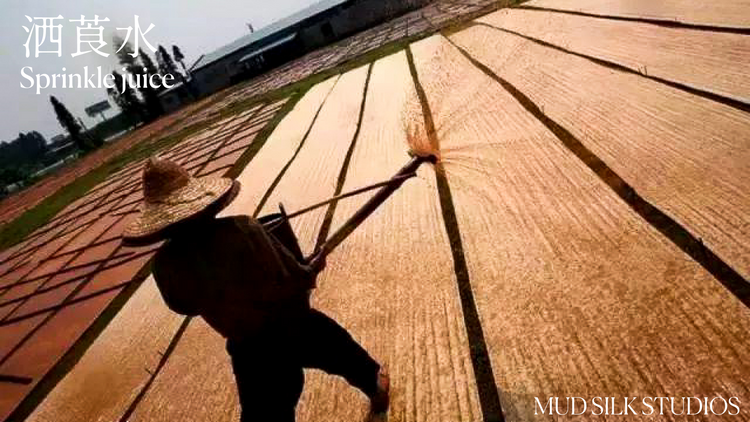
Dyeing and Drying
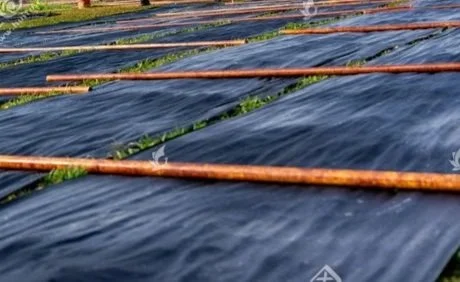
Sun bathing
FAQ about Gambiered Guangdong Silk
Is it mulberry silk?
Yes. The fabric originates from mulberry silk. Its character, however, comes primarily from the natural finishing process rather than the fiber alone. For international labeling compliance, we state the composition as 100% silk.
How does it feel compared to regular silk?
Unlike conventional glossy silk, Gambiered silk has a dry, matte hand feel. It is soft but holds shape, offering gentle structure rather than fluid shine. The fabric feels grounded, stable, and comfortable on the body
Is color variation normal?
Yes. Natural variation in tone and texture is an inherent characteristic of Gambiered silk. Differences in sunlight, mineral content, and hand-processing result in subtle shifts between pieces, which are considered part of the material’s authenticity rather than a defect.
How durable is the fabric?
Gambiered silk is known for its durability relative to conventional silk. The natural finishing process enhances surface stability, making it suitable for repeated wear and long-term use when properly cared for.
How should garments be cared for?
Dry cleaning is recommended. Due to the natural dyeing process, washing with water may affect color consistency. Steaming is preferred over ironing to maintain the fabric’s structure.
Is this material seasonal?
The fabric is breathable and suitable for spring and summer, while its weight and structure also allow for transitional wear. Seasonality depends more on garment design than on the material itself.
Why does NOMERAE work with this material?
Gambiered Guangdong silk aligns naturally with NOMERAE’s design language. Its matte depth, soft structure, and natural variation support clean silhouettes, restrained design, and longevity over trend-driven expression.